Posted on April 3rd, 2015 by Mary Lord
 Meteorites streak through the sky, dropping a mysterious dust. Adults fall unconscious worldwide. To rescue them, kids must gather dirt from Mars. Who says learning science and engineering can’t be fun? Not NASA engineers! They’ve teamed up with engineering students and gamers to create Falling Dust, a free, alternative-reality game that lets multiple players apply real-world skills to save humanity.
Read More
Filed under: Aerospace, e-News, e-Videos, Explore Engineering | Comments Off on NASA to Teens: Game On!
Tags: alternative reality, DUST, game, NASA, Space
Posted on February 28th, 2011 by jxh
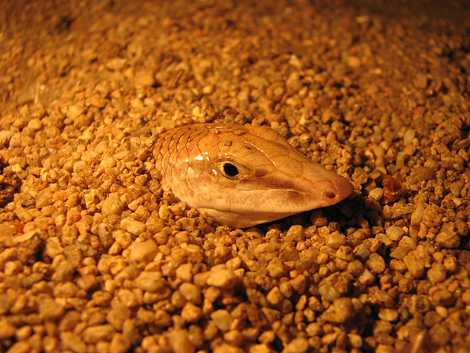
Biomimicry is back!
By studying lizards, a team of researchers has created a snake-like robot that can move through sand. The new robot is the most detailed model of an organism moving through an environment that is not water or air.
The Georgia Institute of Technology researchers studied the sandfish lizard, which is able to burrow into sand to avoid predators or escape the desert’s heat.
Read More
Filed under: e-News, Electrical, Mechanical | 5 Comments »
Tags: Biomimicry, Electrical, Robotics, Space
Posted on February 8th, 2011 by jxh
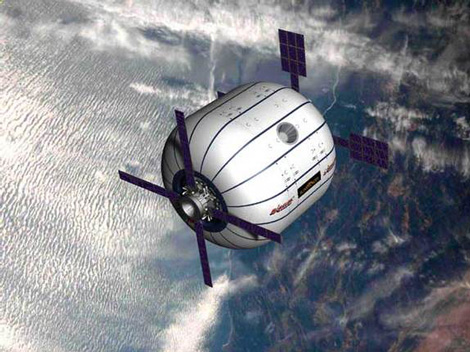
Plans to develop an inflatable space station may soon be given the green light, FoxNews reports. A deputy administrator at NASA recently visited the Bigelow Aerospace facility in Las Vegas to discuss future additions to the International Space Station.
NASA has endorsed the concept of inflatable habitats and Bigelow Aerospace has already built, tested, and launched prototypes, hoping to have the first fully-developed space station in orbit by 2015. One of the main advantages to these new modules is cost reduction, as the lightweight yet impact-resistant material of the inflatable shells would allow them to be larger and less expensive than heavier structures.
Read More
Filed under: Aerospace, Architectural, e-News, Transportation | 4 Comments »
Tags: Aerospace, Architectural, NASA, Space, Transportation
Posted on December 20th, 2010 by jxh
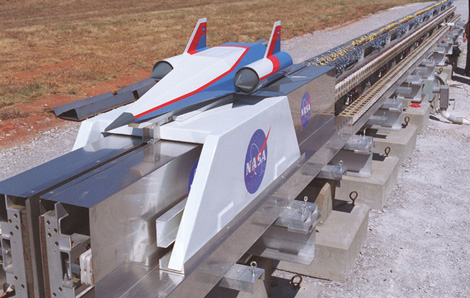
In April, President Obama asked engineers to come up with a less expensive method for launching a spacecraft. So NASA has come up a system that it says would save millions of dollars in propellant and allow more frequent flights – all while improving astronaut safety.
Read More
Filed under: Aerospace, e-News, Mechanical, Transportation | 4 Comments »
Tags: Aerospace, Mechanical, Military, NASA, Space
Posted on November 1st, 2010 by jxh
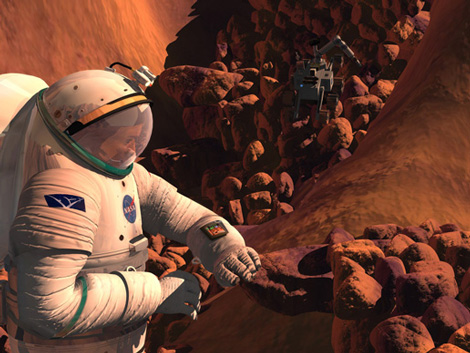 This is the journey of a lifetime – literally.
NASA and DARPA have teamed up to build a Hundred-Year Starship, an initiative that would entail passengers leaving Earth and never coming back.
Read More
Filed under: Aerospace, e-News | 10 Comments »
Tags: Aerospace, Space